
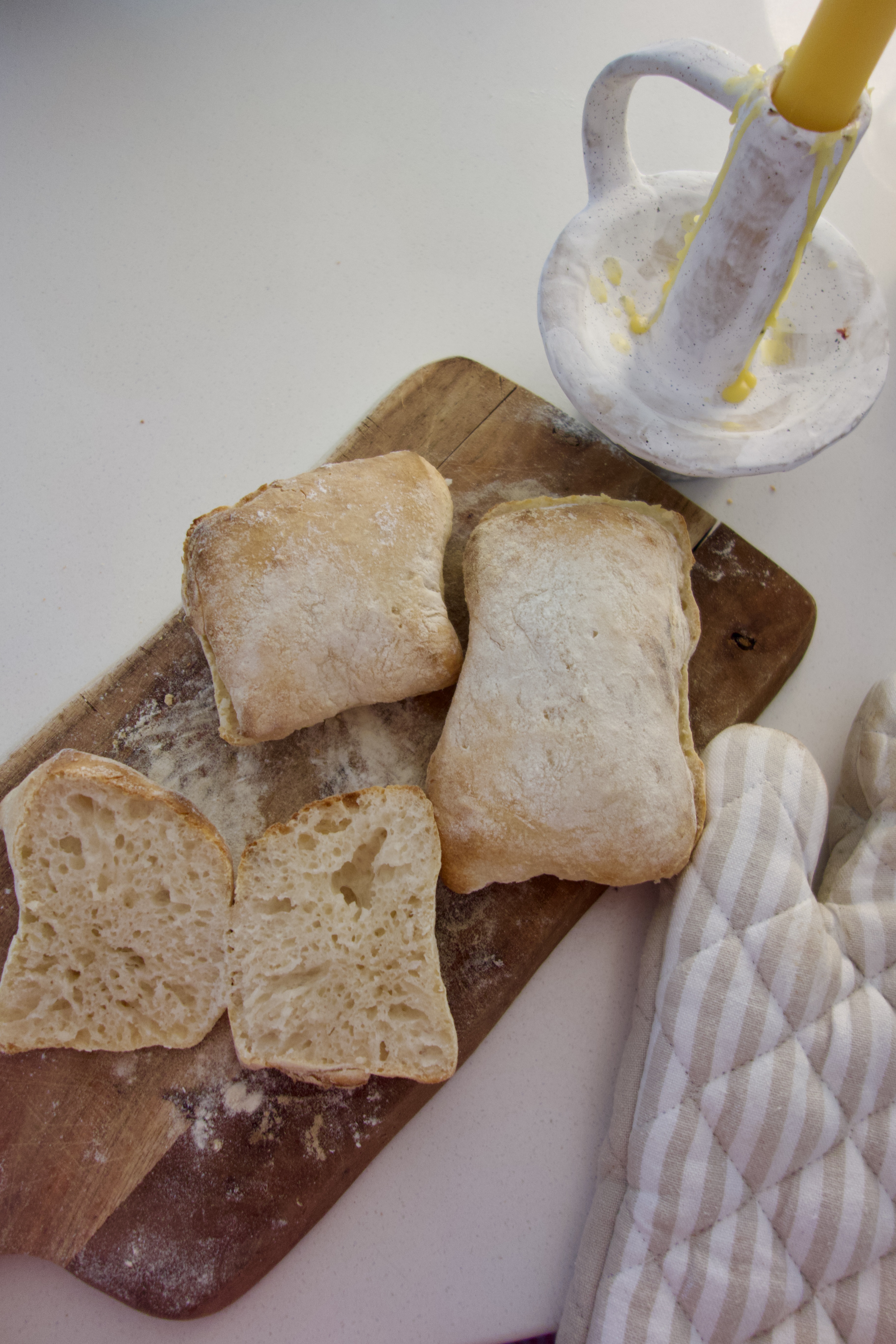
There’s something special about a bread recipe that fits seamlessly into your routine. This easy sourdough ciabatta requires minimal effort—just mix, let it ferment overnight, and bake fresh whenever you need. The dough develops incredible flavor over time, and you can store it in the fridge for up to a week, baking small batches as you go.


Why This Recipe Works
- No Kneading Required – Simply mix the ingredients and let time do the work.
- Long Fermentation = Maximum Flavor – The overnight rise gives the bread a deep, rich taste.
- Flexible Baking Schedule – The dough can be stored in the fridge and used as needed.
- Light, Airy Texture – The high-hydration dough creates that signature ciabatta crumb.
Sourdough Ciabatta Recipe
A rustic Italian-style sourdough ciabatta with overnight fermentation for maximum flavor development
- Total time: 16-20 hours including:
- Initial mixing: 15 minutes
- Overnight fermentation: 10-12 hours
- Cold rest: minimum 1 hour
- The dough can be stored in the fridge for up to 1 week
Ingredients
- 350g filtered water
- 100g active sourdough starter
- 500g bread flour
- 10g salt
Directions
- Day 1: Mix & Overnight Fermentation
- In a large bowl, mix the water, starter, flour, and salt until well combined. The dough will be sticky and shaggy—this is normal. No kneading required!
- Cover the bowl and leave at room temperature for overnight proof (approximately 8 PM – 6 AM). The dough should double in size and become bubbly.
- Transfer the bowl to the fridge for at least 1 hour before baking. This makes handling easier and enhances the flavor.
- Set your oven to its maximum temperature and allow it to fully heat before baking.
- Flour a work surface and gently transfer the dough from the bowl, keeping as many bubbles intact as possible. Avoid pressing or flattening.
- Stretch the dough into a rectangle and cut into individual ciabatta rolls or leave as one larger loaf.
- Lightly flour both the top and bottom of each piece.
- Place in the preheated oven and bake for 12 minutes until golden and crisp.
- Let the ciabatta rest for a few minutes to set before slicing.
Day 2: Chill & Shape
Note: This dough can be stored in the fridge for up to 1 week, using portions as needed.
Troubleshooting & Common Questions
“Why isn’t my dough rising?”
Make sure your sourdough starter is active and bubbly before mixing. Room temperature should be around 21-24°C (70-75°F) for optimal fermentation.
“My ciabatta spread too much. What went wrong?”
This is a wet dough by nature, but if it’s spreading too much, try reducing the water by 25g in your next batch.
“Can I make this with commercial yeast?”
While possible, sourdough gives this ciabatta its signature flavor and better keeping qualities. If you’re interested in starting your sourdough journey, check out my sourdough starter guide!
Serving Suggestions
- Split and toast for the ultimate sandwich bread.
- Serve alongside your favorite pasta dish.
- Perfect for dipping in herb-infused olive oil.
- Makes amazing garlic bread when brushed with butter and roasted garlic.
Method – In Depth
1. Mix the Dough (Night Before Baking)
- In a large bowl, combine water, sourdough starter, flour, and salt. Mix until well combined. The dough will be sticky and shaggy—this is normal.
- Cover the bowl and let it ferment overnight at room temperature (about 8 PM – 6 AM).
2. Refrigerate Before Baking
- The next morning, transfer the dough to the fridge for at least 1 hour before shaping and baking. This helps firm up the dough for easier handling.
- The dough can be stored in the fridge for up to 7 days, allowing you to bake fresh ciabatta on demand.
3. Shape the Ciabatta
- Preheat your oven to the highest temperature possible (usually 230-260°C / 450-500°F).
- Lightly flour your work surface and gently turn the dough out of the bowl. Do not punch down or knead—it’s important to preserve the air bubbles.
- Stretch the dough into a rough rectangle and cut into ciabatta rolls or a full loaf.
- Dust the top and bottom of each piece with flour.
4. Bake
- Transfer to a baking tray lined with parchment paper.
- Bake for 12 minutes or until the crust is golden brown and crisp.
- Let cool slightly before slicing to allow the crumb to set.
Storage Information
- Dough Storage: Keep in the fridge for up to 7 days, covered.
- Baked Ciabatta: Store at room temperature in a paper bag for up to 2 days.
- Freezing: Freeze baked ciabatta for up to 3 months. Reheat in the oven at 180°C (350°F) for a few minutes before serving.
This method makes it easy to enjoy fresh, bakery-style ciabatta any day of the week. Whether you’re making sandwiches, dipping it in olive oil, or pairing it with soup, this no-fuss recipe guarantees perfect results every time.


Leave a Reply